ServicesDental Implants
Dental Implants in Lake Dallas
A missing tooth affects how you chew, how you smile and how the teeth around the gap hold up. We replace it with an implant planned from a 3D scan of your jaw, placed with sterile instruments and fitted with a crown that feels like your own.
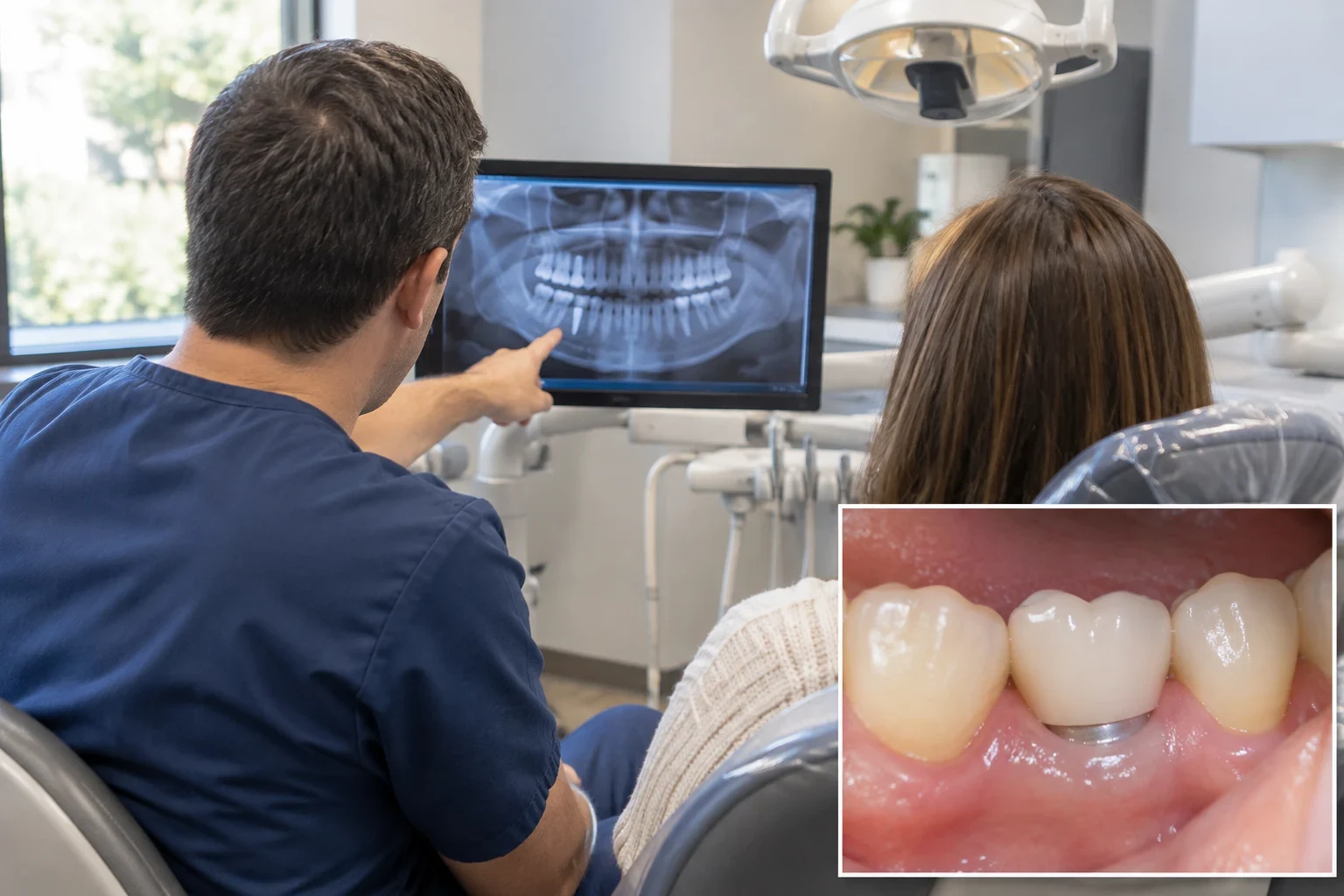
A permanent tooth, planned before we ever begin
A dental implant is a small titanium post set into the jawbone in the spot where a tooth root once was. After the bone grows snugly against the post, it becomes the anchor for your new tooth, or for a bridge or denture if several teeth are missing. It stays put instead of shifting like a removable partial, and the healthy teeth on either side of the gap never have to be filed down the way they would for a traditional bridge.
Safety drives how we work. Before any placement we review your medical history, your medications and a 3D scan of the area, so we know exactly where the nerves, the sinus and the edges of the bone sit. That groundwork is what keeps implant surgery short, comfortable and predictable.
Patients come to us from Lake Dallas, Corinth, Hickory Creek and nearby towns, often after going without a tooth for years. It is rarely too late to ask if an implant could work for you.
What your implant treatment includes
- 3D CBCT imaging
- When it is needed, a cone beam scan shows bone height, width and density in three dimensions. Flat X-rays can miss those details, and they decide where the post can safely go.
- A written treatment plan
- You get a plan that lists each step, the number of visits and what each part costs. You can take it home, check it against your insurance and decide without pressure.
- Sterile placement
- Instruments are sterilized and sealed for each patient, and the treatment room is prepared fresh for your visit. We numb the area thoroughly and check in with you throughout.
- Bone grafting when it is needed
- If the bone has thinned since the tooth was lost, a graft can rebuild it so the implant has something solid to anchor into. We only recommend it when the scan shows it is necessary.
- Your final crown or restoration
- The visible tooth is shaded to match your neighbors and shaped for your bite. For several missing teeth, implants can also support a bridge or a denture that snaps firmly in place.
Signs an implant may be the right call
A gap you chew around
Favoring one side of your mouth puts more force on fewer teeth. Year after year, that extra work can crack fillings and wear down enamel.
A denture or partial that moves
Loose dentures rub sore spots and make some foods hard to eat. A few implants can hold a denture steady so it stays put while you talk and chew.
A tooth that cannot be saved
A tooth with a deep fracture or a failed root canal sometimes has to come out. Planning the implant before the extraction can protect the bone and shorten the overall timeline.
Neighboring teeth starting to shift
Teeth drift and tip into an empty space, and the tooth above or below can grow down into it. Replacing the missing tooth helps keep your bite where it belongs.
How the process works, step by step
- 1
Exam and 3D imaging
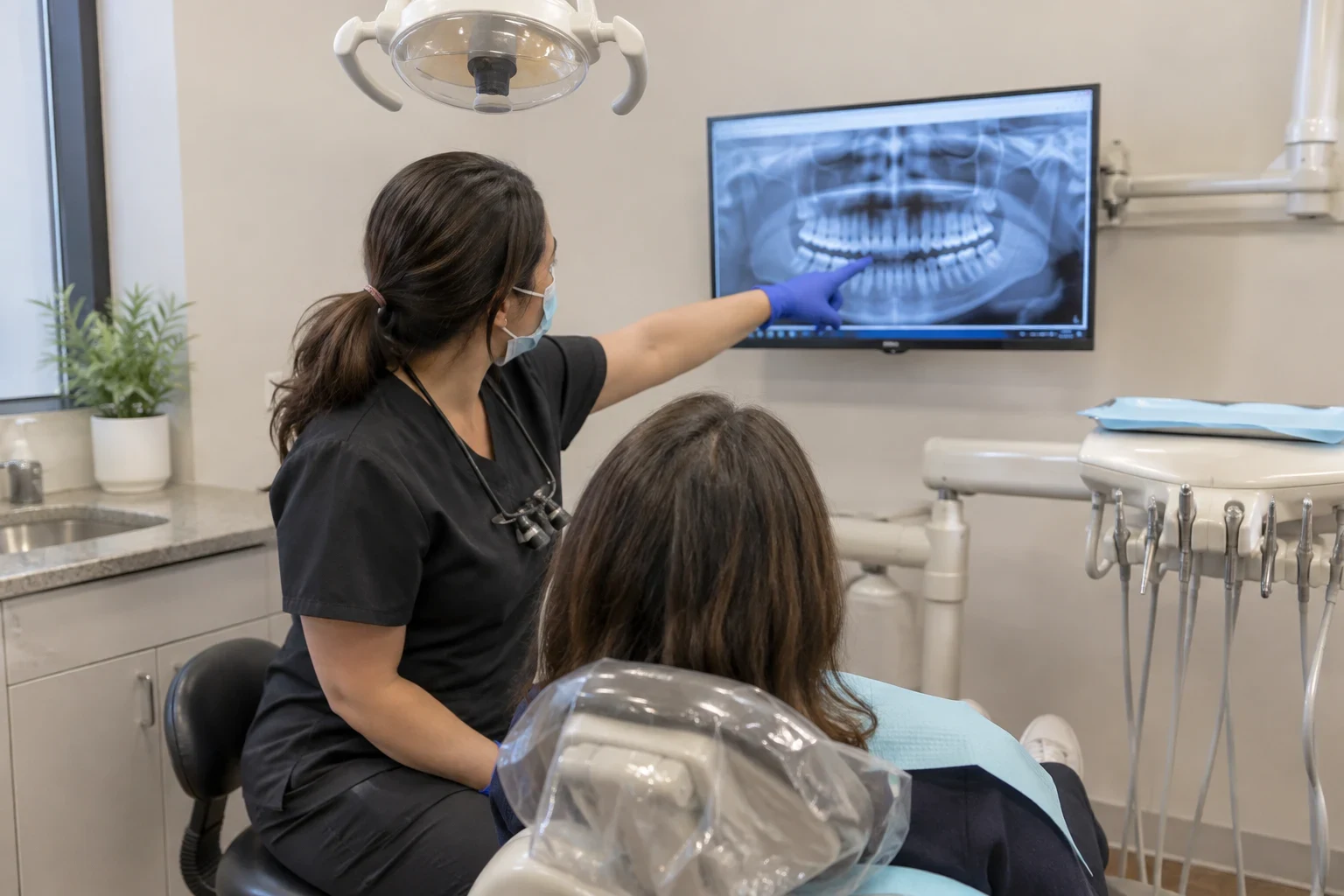
Your first visit includes a careful look at your teeth and gums, digital X-rays and, when it is called for, a CBCT scan. We also ask what you hope treatment will fix. The images tell us if you can move ahead now or would benefit from a graft first.
- 2
Health review and planning
We go over conditions like diabetes, blood thinners and smoking, since each one affects healing. If we need to coordinate with your physician, we do that before scheduling anything.
- 3
Placing the implant
With the area fully numb, we place the post in a single appointment. Most patients are back to their usual routine within a day or two, with written aftercare instructions and a number to reach us with questions.
- 4
Healing time
Over the next few months the bone bonds to the implant. You can wear a temporary tooth during this stretch, and short checkups let us confirm healing is on track.
- 5
Your new tooth
When the implant is stable, we attach the abutment and your final crown, then fine-tune your bite so it feels natural from the first meal.
What affects the cost of dental implants
Implant fees vary from patient to patient because every jaw, bite and health history is a little different. Your written plan lists each piece of treatment separately, so you can see where the money goes before anything starts. These are the things that move the total.
- Number of teeth being replaced
- One post with one crown is the most straightforward plan. When several teeth are gone, a couple of well-placed implants can often carry a bridge or a denture, which can mean fewer posts than missing teeth.
- Bone grafting or sinus work
- Rebuilding thin bone adds a step, a fee and some healing time. Your scan shows us early if you need it, so you hear about it at the start and not halfway through.
- Removing a tooth first
- A broken or failing tooth that is still in place has to come out before the implant goes in. In some cases we can remove it and place a graft at the same appointment.
- Kind of restoration on top
- A single crown, an implant bridge and an implant-supported denture each need different materials and lab time, and the price reflects that.
- Insurance and payment options
- Some PPO plans pay toward part of implant care. We look up your benefits and explain the financing and membership choices before you agree to anything.
Dental implant questions we hear often
Something not covered here? (940) 260-3252
Does getting an implant hurt?
We numb the area completely before we begin, so most patients notice pressure instead of pain while the post is placed. Any soreness afterward tends to be mild and usually settles with over-the-counter pain relief within a few days. You go home with written aftercare steps so you know what to expect.
Am I a candidate if I lost the tooth years ago?
Many people are. The jawbone does shrink once a tooth is gone, but grafting can often rebuild it. Your 3D scan shows how much bone is there and what it would take to support an implant.
Does insurance cover dental implants?
That depends on your plan. We are in-network with 15+ major PPO dental insurance plans, and we check your benefits and explain your coverage before treatment begins. If you have no insurance, our In-house Membership Plan is another option.
Can I spread out the payments?
Yes. You can pay over as long as 24 months at 0% interest, and finding out if you are preapproved does not affect your credit score. We are happy to explain how it works by phone or at your evaluation.
How long does the whole process take?
Most patients go from placement to their final crown in a few months, since the bone needs time to bond with the post. If you need a graft or an extraction first, the timeline is longer. Your treatment plan spells out the schedule before you commit.
How do I start?
Most patients begin with our $25 focused evaluation. During that visit we look closely at your teeth and gums, take digital X-ray images and add 3D cone beam imaging when your case calls for it. Then we sit down together, map out a plan and talk through your questions. You leave knowing if an implant fits your situation and what the treatment would involve.
Find out if an implant is right for you
A focused evaluation answers the big questions: whether you have enough bone, how many visits it takes and what it costs. Give us a call and we will set it up.