ServicesDentures
Dentures in Lake Dallas
Missing several teeth, or all of them, makes eating and smiling harder than it should be. We make full and partial dentures that fit your mouth and your health history, and we adjust them until chewing feels natural and nothing rubs.
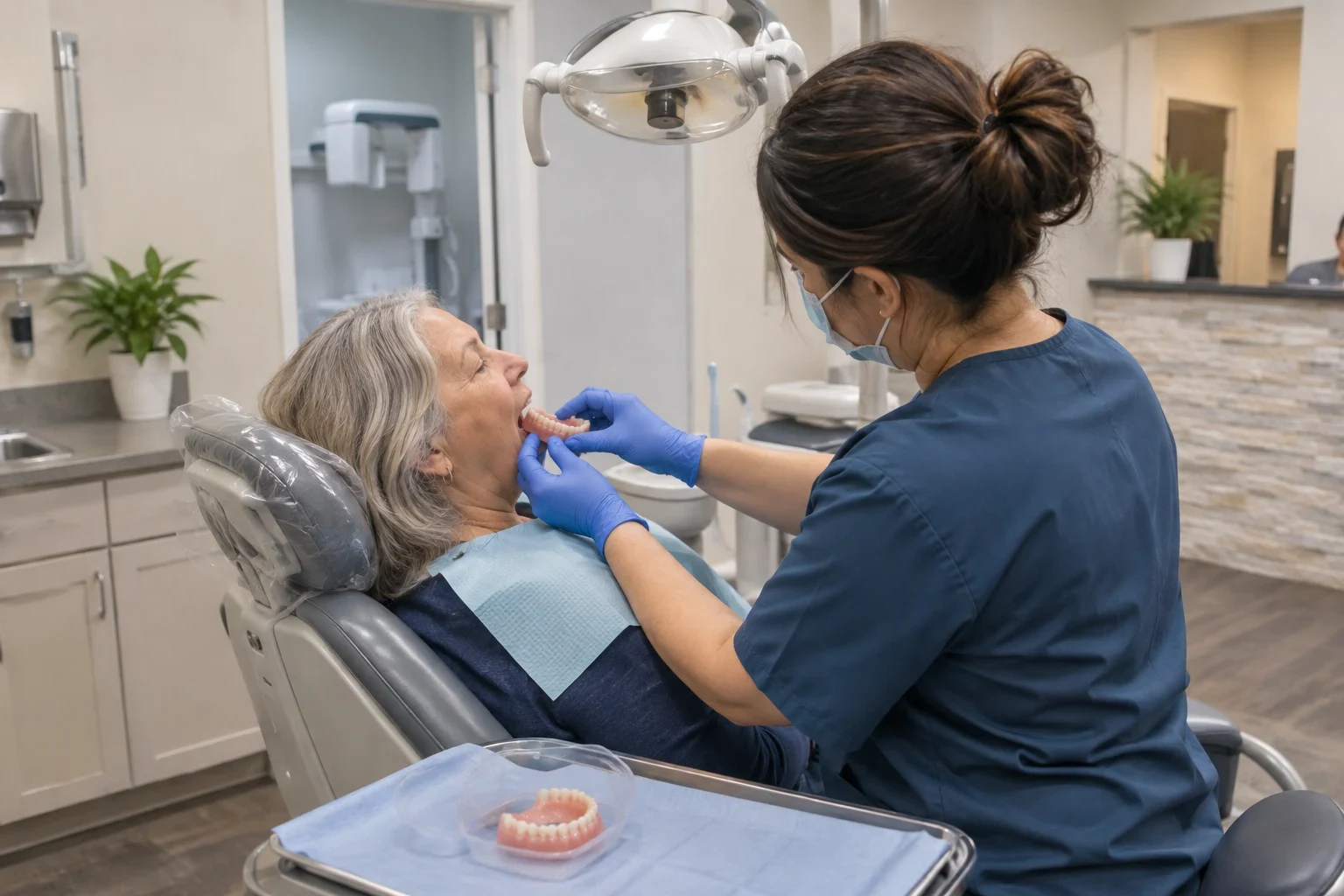
When dentures are the right choice
Dentures replace a full arch of teeth or fill gaps between the natural teeth you still have. They suit patients who want a removable option, who have lost bone over time, or who are looking for a way to restore their smile without surgery.
Safety shapes every step. Before we take a single impression, we review your medications and medical conditions, check your gums and the bone under them, and look for sore spots or infection that a new appliance could make worse. A denture placed over an untreated problem only hides it.
If you would like more stability, we can talk through implant-supported dentures, which snap onto a few dental implants. We lay out both paths honestly so you can choose.
What your denture care includes
Full dentures
A complete upper or lower set for patients missing all teeth on an arch. We shape the base to follow your gums closely, which helps with suction and comfort.
Partial dentures
A removable plate that fills gaps and clips gently to your remaining teeth. It keeps neighboring teeth from drifting into the empty spaces.
Implant-supported dentures
A denture that locks onto dental implants so it stays put when you eat and talk. We check bone with a CBCT scan first to confirm implants are a safe fit.
Health screening first
We go over your medical history, blood thinners and conditions like diabetes that affect healing. We also examine soft tissue closely before planning anything.
Adjustments and relines
Gums change shape, especially after extractions. We smooth pressure points and reline the base when the fit loosens, so small problems do not turn into sores.
Signs dentures could help you
Many teeth already gone
When several teeth are missing, you end up chewing on one side, and the teeth that remain carry more load than they were built for.
Teeth that wobble or ache
Advanced gum disease can loosen teeth until they hurt. In some cases, removing them and moving to a denture is the healthier choice.
A worn denture that won't stay put
Reaching for adhesive every day, or hearing a click when you speak, usually means your gums have changed shape. A loose plate can rub tender tissue raw.
Recurring sore spots
Irritation that keeps returning under a denture deserves a closer look. We examine the tissue and correct the fit.
Cutting foods from your plate
If you pass on steak, raw carrots or crusty bread because biting hurts, your teeth are telling you something needs attention.
How we make your dentures
- 1
Exam and health review
We examine your mouth, take digital X-rays and review your medical history. Then we explain your options and build a written treatment plan.
- 2
Preparing your mouth
If any teeth need to come out, we handle extractions first and give the gums time to heal. Treating infection now keeps your new denture from sitting on a problem.
- 3
Impressions and try-in
We take detailed impressions and bites, then let you try a wax version. You check the look and feel before the final denture is made.
- 4
Delivery and follow-ups
We place your denture, show you how to clean and remove it safely, and see you back for adjustments. Most patients need a few small tweaks in the first weeks.
What affects the cost of dentures
Every mouth is different, so we price your dentures only after we have examined yours. You get a written treatment plan that lists each step before any work begins. We are in-network with 15+ major PPO dental insurance plans, and our team will look up your benefits and tell you which parts your plan is likely to cover.
- Full, partial or implant-supported
- A removable partial, a complete set and a denture that clips onto implants use different materials and need a different number of visits.
- Treatment before the denture
- Taking out failing teeth, treating gum disease or checking bone with a scan comes first, and each step becomes part of the plan.
- Materials and fit
- The base material and the quality of the replacement teeth affect how natural your smile looks and how long the denture holds up.
- Relines as gums heal
- Gums shrink after extractions, so an early reline is common. We build it into your plan from the start so it is not a surprise later.
- How you pay
- PPO benefits can cover part of the work. If you have no insurance, you can join our In-house Membership Plan. You can also spread the balance out with 0% interest financing for up to 24 months, and checking for preapproval has no credit score impact.
Denture questions patients ask us
Something not covered here? (940) 260-3252
How long until my new dentures feel normal?
For most patients it takes a few weeks. Talking and chewing get easier with practice, and our follow-up visits are there to relieve any pressure points. If a sore spot shows up before your next visit, give us a call and we will find a time to see you.
Can I get dentures the same day my teeth are removed?
Sometimes, yes. An immediate denture can go in right after extractions so you never leave without teeth. Because the gums reshape as they heal, that denture usually needs a reline a few months later. After your exam we will tell you whether it is a safe option for you.
Are implant-supported dentures better than regular dentures?
Many patients prefer them because they hold firm and help protect the jawbone. They do involve surgery and enough healthy bone to support the implants, so they are not the right fit for everyone. A CBCT scan shows us what your bone can support, and we lay out both choices plainly.
How should I care for my dentures?
Remove them at night, clean them with a soft brush and a non-abrasive cleaner, and keep them in water so the base does not warp. Brush your gums and any natural teeth as well. Skip hot water, since heat can bend the denture out of shape.
I don't have dental insurance. Can I still get dentures?
Yes. Our In-house Membership Plan for uninsured patients covers routine care, and we also offer 0% interest financing for up to 24 months. Checking whether you preapprove has no credit score impact. We review every number with you before treatment begins.
Ready to eat and smile comfortably again
Your first step is an exam and an honest look at your options. The $89 New Patient Special covers a full exam and cleaning, and we serve patients from Lake Dallas, Corinth, Denton and nearby.