ServicesRoot Canals
Root Canals in Lake Dallas
A deep ache, a lingering sting from cold coffee or a swollen gum can mean the nerve inside a tooth is infected. Root canal treatment removes that infection and lets you keep your natural tooth. We confirm the cause first and walk you through every step.
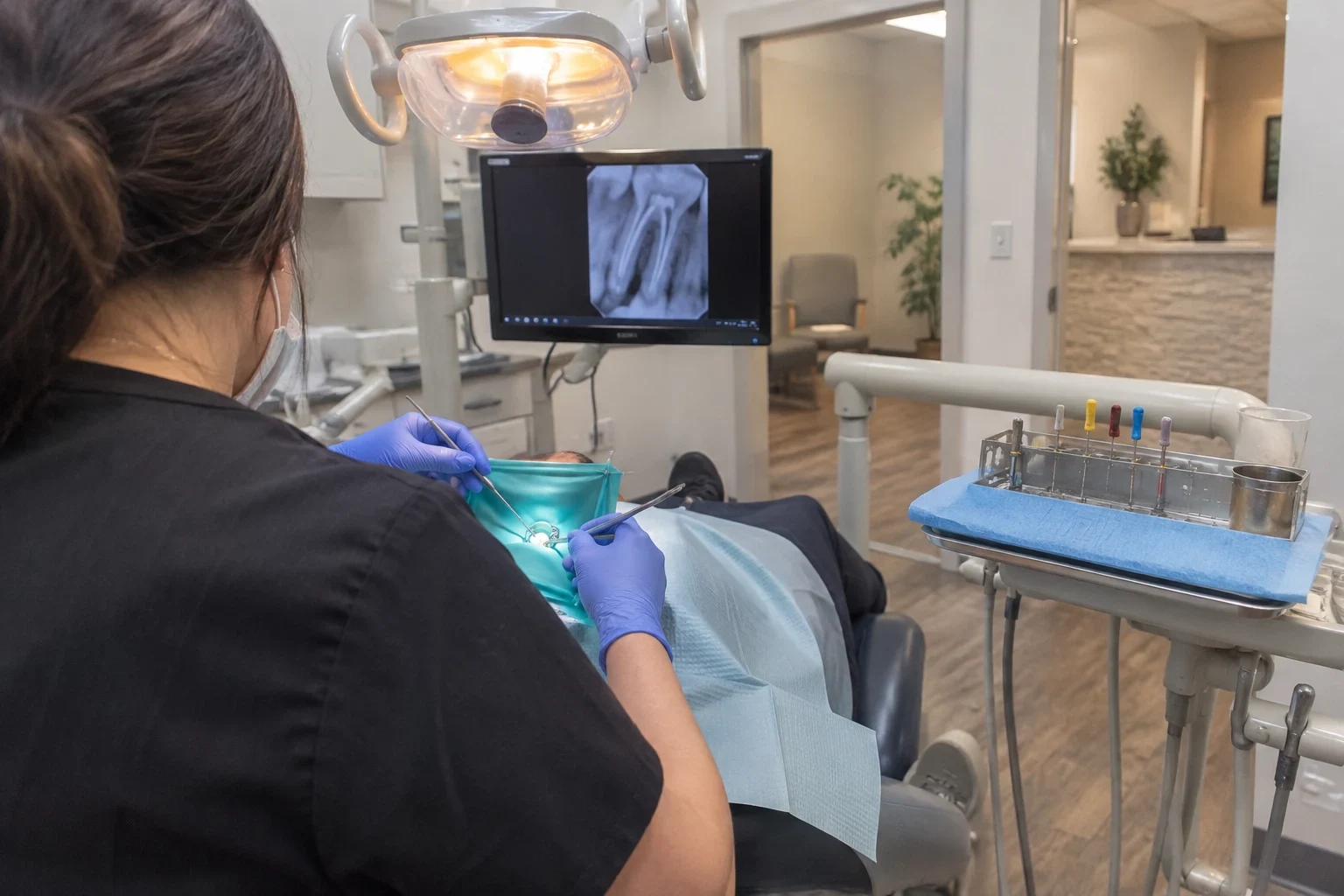
Saving a Tooth From the Inside
Inside every tooth is a small channel of nerve and blood vessels called the pulp. A deep cavity, a crack or an old filling that leaks can let bacteria reach it. Once the pulp is infected, it will not heal by itself, and the infection can spread into the bone around the root.
During a root canal, we clean out the infected pulp, disinfect the canals and seal them so bacteria cannot get back in. The outer tooth stays in place, so you keep your own root, your bite and the bone that root supports. For most patients, the visit feels much like getting a large filling.
Safety guides how we work. We review your health history and medications before any treatment, take X-rays to see the full root, and keep the tooth isolated the whole time. If a tooth is too damaged to save, we tell you plainly and talk through extractions and dental implants instead.
What Your Root Canal Includes
Diagnosis with digital X-rays
We image the tooth and the bone around it to count its canals and see whether infection has reached the root tip. That tells us whether the tooth can be saved before you agree to anything.
Numbing you can count on
Local anesthetic goes in first, and we check the tooth and gum for any feeling before a single instrument touches it. Lift your hand at any point and we stop and add more.
Rubber dam isolation
A thin sheet fits around the tooth to keep saliva out and to stop rinsing solutions, tiny instruments and debris from reaching your throat. It is a small step that protects you and keeps the canals clean.
Cleaning, shaping and sealing
We take out the infected pulp, flush the canals with a disinfecting rinse and fill them with a rubber-like material that seals the tooth from the inside.
Your crown or filling plan
A molar or premolar that has had a root canal generally needs a crown so it does not fracture when you chew. Before you go, we explain what your tooth will need next and the reason for it.
Signs a Tooth May Need a Root Canal
Sensitivity that will not fade
A quick twinge from ice water that disappears right away is normal. If the ache from hot or cold lingers for a minute or more, the nerve is often inflamed.
A throbbing ache that wakes you up
Pain that pulses on its own, with nothing setting it off, often gets worse at night or when you lie flat. That pattern points to pressure building in the pulp.
A gum bump or puffy spot
A tender, raised area next to one tooth, or a small blister that leaks fluid, is a common sign of an abscess at the root. Infection can travel, so it is worth having us check it soon.
Pain when you bite down
Soreness when chewing on one side can come from infection around the root or a crack that has reached the nerve.
A tooth turning darker
A tooth that slowly turns gray after a knock or fall may have a nerve that has died, sometimes well before any pain shows up.
How Treatment Day Goes
- 1
Check in and review
We go over your health history, medications and allergies, then look at the X-rays with you. You will know which tooth we are treating and what comes next before we begin.
- 2
Numbing and isolation
We numb the area, give it time to take full effect and then place the rubber dam. Plenty of patients put on music or close their eyes at this point.
- 3
Cleaning the canals
A tiny access point is created through the chewing surface so we can reach the pulp, remove it and disinfect every canal. Molars take more time since they often have three or four canals.
- 4
Sealing and a temporary cap
Once the canals are filled and sealed, a temporary filling closes the access point. A tooth with heavy infection may be completed over two visits so medication can work in between.
- 5
Recovery and the crown
The tooth may be tender for a few days, and over-the-counter pain relievers usually take care of it. We book your crown appointment so the tooth stays protected for years to come.
What Affects the Cost of a Root Canal
Every tooth has its own shape and its own history, so you get a written treatment plan with each item listed before any work begins. If we find something unexpected, we stop and talk it over with you first. These are the things that most often change the total.
- Which tooth needs care
- A front tooth usually has one canal and is easy to reach. Molars sit farther back and often hold three or four canals, so the visit runs longer.
- How far the infection has spread
- Infection that has moved into the bone near the root tip can call for a second visit, with medication placed in the tooth between appointments.
- First treatment or retreatment
- A tooth that had a root canal years ago has to have the old filling material removed before the canals can be cleaned again. That extra step adds chair time.
- The crown afterward
- Back teeth almost always need a crown once the canals are sealed. Count it as part of what it costs to keep the tooth, not a separate surprise.
- Insurance, membership and financing
- Many patients with PPO coverage find their plan among the 15+ major PPO dental insurance plans we accept in-network. Without insurance, our In-house Membership Plan is an option. We also offer 0% interest financing for up to 24 months, and seeing if you preapprove does not affect your credit score.
Root Canal Questions We Hear Often
Something not covered here? (940) 260-3252
Does a root canal hurt?
With the tooth fully numb, treatment feels a lot like sitting for a longer filling. Most of the pain people remember comes from the infection before treatment, and clearing it out usually brings relief. Mild soreness for a few days afterward is expected.
How long does the appointment take?
Plan on roughly an hour for a front tooth. Molars often need more time, and a badly infected tooth may be finished across two visits. Once we look at your X-rays, we will tell you how long to set aside.
Would it be better to just pull the tooth?
When a tooth can be saved, keeping it is usually the better option because it holds your bite steady and keeps the jawbone in place. If it has cracked below the gumline or is too broken down, we will tell you honestly and walk you through extractions and replacing the tooth with dental implants.
Can I go back to work afterward?
Most patients head back to their normal day right after the visit. The numbness in your lip and cheek lasts a few hours, so hold off on meals until you can feel them again, and favor the other side when chewing until your crown is in.
Do I really need a crown?
For back teeth, nearly always. Once the pulp is gone the tooth gets more brittle over time, and a crown keeps chewing forces from splitting it. A front tooth can sometimes be finished with a filling alone.
Get That Tooth Checked Before It Gets Worse
An infected tooth rarely improves on its own, and catching it early gives you the best chance of saving it. Our $25 Focused Evaluation includes a comprehensive exam, digital X-rays, CBCT scan if needed, treatment planning and consultation.